how it works
What happens on the paper
A cyanotype is paper brushed with iron salts and left in the sun under a negative or a pressed plant. Where light gets through, the iron turns Prussian blue; the rest washes away. The simulator follows each of those steps, and below you can see how its prints compare with real ones.
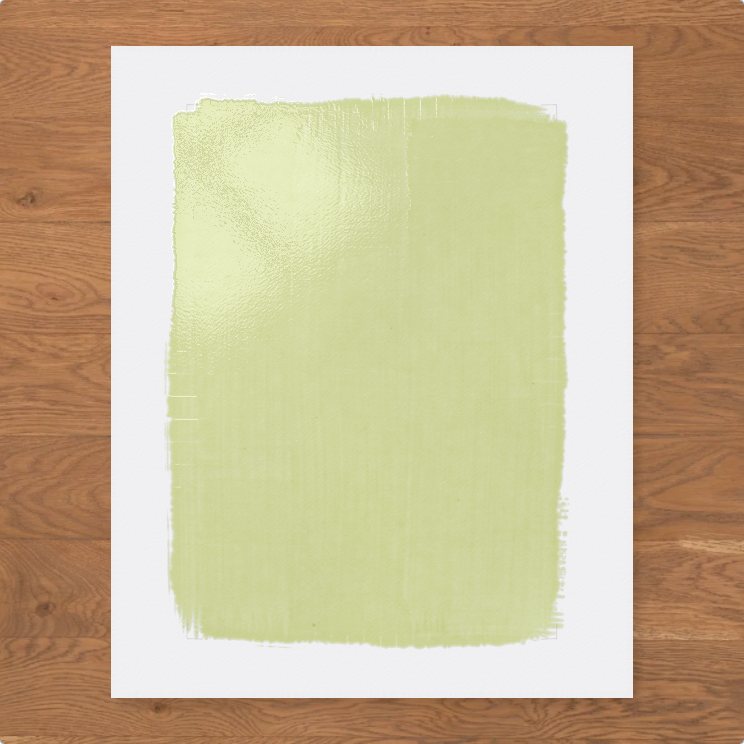 1 · coat
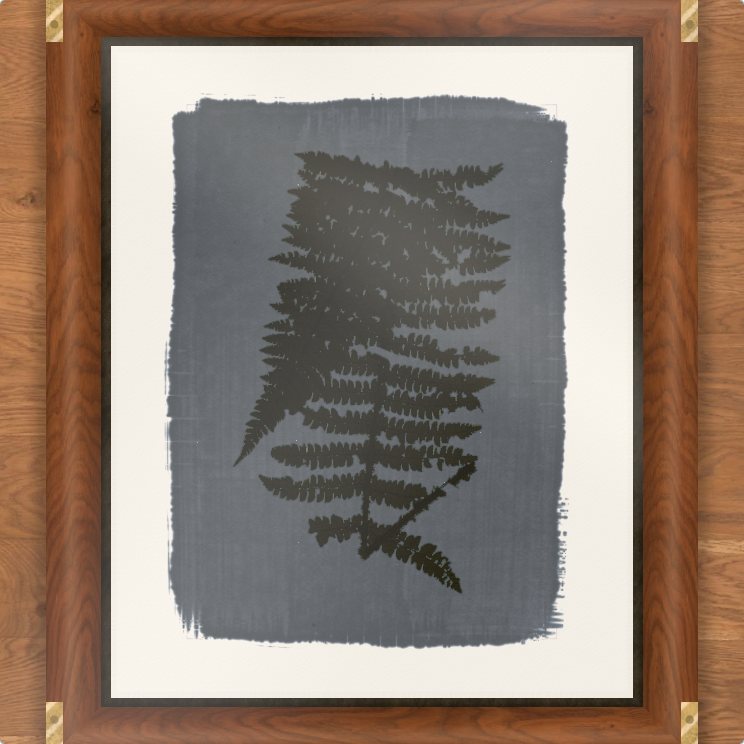 2 · expose
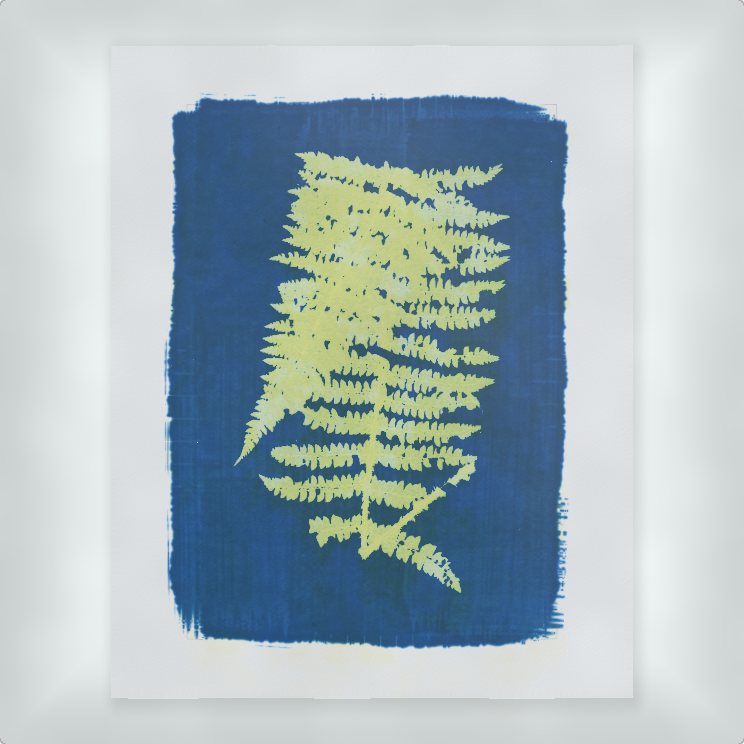 3 · wash
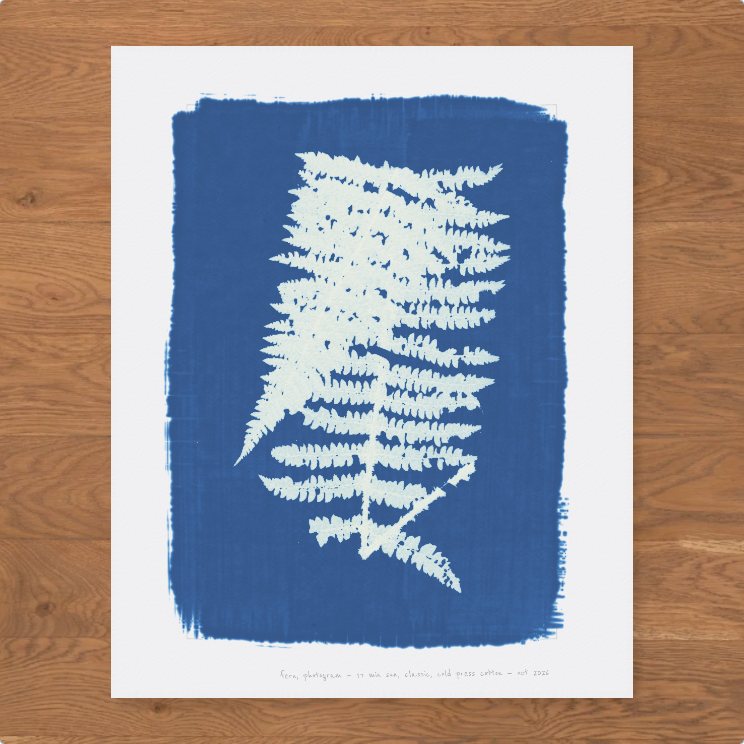 4 · dry
1 Light turns iron blue
The coating is a mix of two iron salts, ferric ammonium citrate and potassium ferricyanide. When ultraviolet light hits the citrate, it turns Fe³⁺ iron into Fe²⁺. The Fe²⁺ then reacts with the ferricyanide around it to form Prussian blue, a pigment that stays locked in the paper fibers.
The simulator follows the light down through the coating. The yellow ferricyanide and the new blue both absorb some of it on the way, so the darkest parts of a print fill in more slowly than the rest.
2 How much light makes how much blue
Printers test their process with a step tablet: a strip of film in 21 gray steps, each letting through about 30% less light than the one before. Mike Ware, the chemist behind much of the modern work on cyanotype, printed one in sunlight and measured every step with a densitometer.
The simulator isn’t told how long a print should take. It works out the exposure from the chemistry and the brightness of each light, and the times it arrives at land where printers’ own times do.
3 The color of the blue
The blue on screen isn’t picked from a palette. It comes from how strongly Prussian blue absorbs each color of light, how light scatters inside paper, and how the eye sees color. Here it is step by step next to a real print.
4 Water and air
The wash carries away the yellow salts that never saw light, along with a little loosely held blue; alkaline water takes more. Out of the wash, a print is paler than it will end up. Part of its blue is in a colorless form, Prussian white, which takes oxygen from the air and turns blue again over the next day.
5 Real prints, side by side
Three 19th-century cyanotypes from the Metropolitan Museum of Art’s open-access collection, printed again in the simulator. Anna Atkins laid her algae and leaves directly on the paper, so their outlines, and how thin each part was, are traced from her prints. Everything else comes from the simulator: the brushed coat, the paper, the exposure, the wash and the color of the blue. Henry Bosse printed from a glass negative, so his print was turned back into a positive and printed the way a photo is on the bench.
Drag across each pair to compare.
6 Up close
Up close, a cyanotype is mostly paper. The blue sits in the fibers and hollows of the sheet, and the edge of the coat is wherever the brush ran dry. The papers in the simulator are scans of real cold-pressed and smooth paper, and both the coating and the light follow their surface.
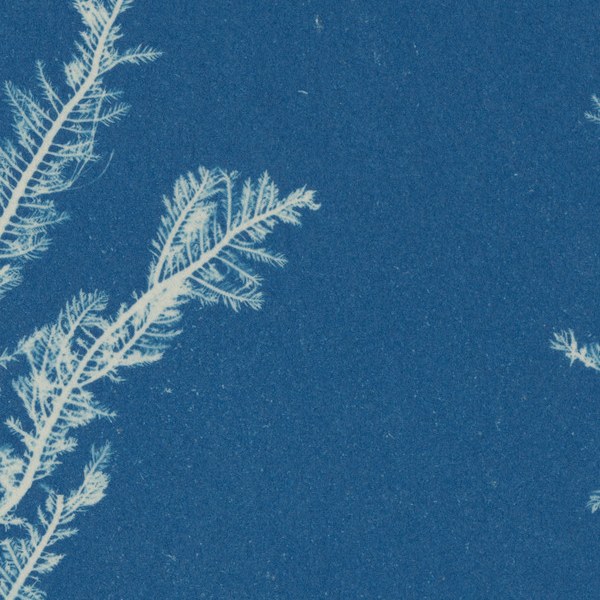 Atkins, about 4.6 cm across
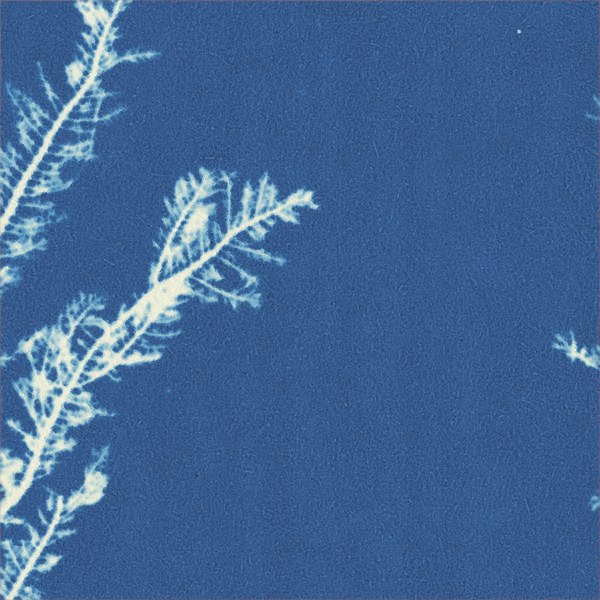 simulator, the same patch
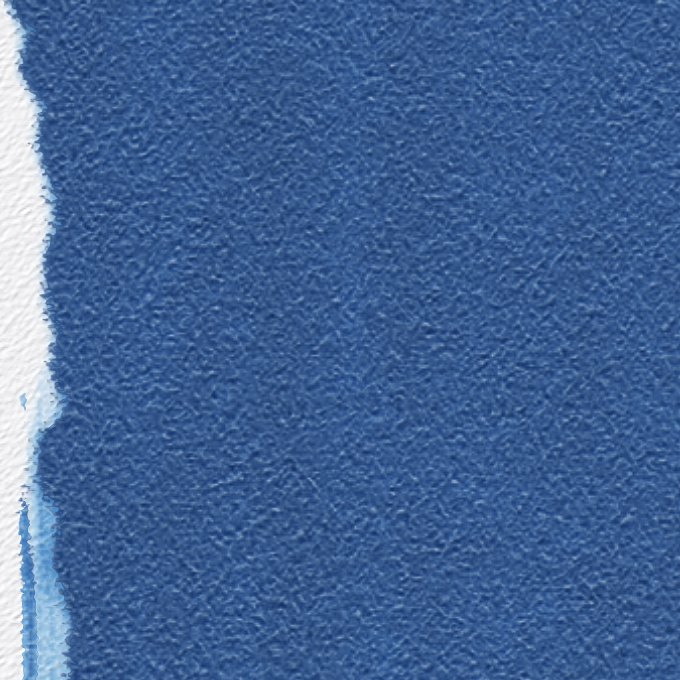 cold-pressed cotton
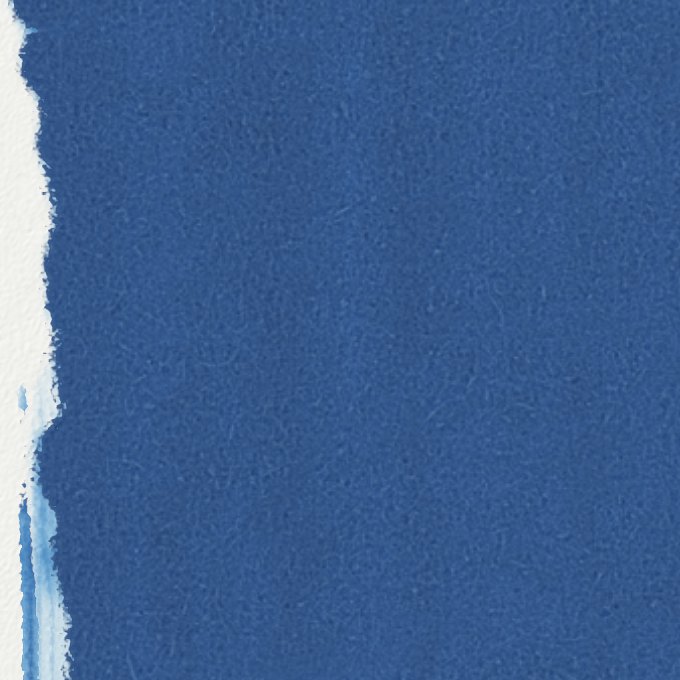 smooth cotton
 kozo washi
7 Methods and sources
- Coating. A hake brush laid down as hundreds of small dabs. The liquid levels out, soaks in and dries with a faint tide line.
- Paper. Six papers, each with its own surface, fibers, sizing and color.
- Exposure. Ultraviolet light absorbed layer by layer through the coating; heavy overexposure turns the shadows gray-bronze until the wash.
- Wash and drying. The yellow salts clearing, loose blue lost to the water, the blue returning in air or peroxide, and tea or coffee toning.
- Color. Light scattering in paper (Kubelka–Munk), the eye’s color response (CIE 1931) and sRGB.
- Testing. 24 automated checks against published measurements, plus browser tests of the whole process.
Sources: Mike Ware, Cyanomicon, and “A Blueprint for Conserving Cyanotypes” (AIC, 2003); Christina Z. Anderson, Cyanotype (2019); Sandy King’s UV light-source tests; the alternativephotography.com exposure survey; Moor & Moor on washing. Images: Julia Margaret Cameron, Sir John Herschel, 1867; Anna Atkins, Ptilota plumosa and Spiraea aruncus; Henry P. Bosse, Rock Island bridge; all the Metropolitan Museum of Art, open access. Pressed plants: Naturalis Biodiversity Center, Leiden. Paper, wood, felt and brass surfaces: ambientCG and Poly Haven.